Customer Pain Point Tracking Across Deals
Understanding customer pain points is central to winning deals. But in many organizations, this information is scattered across notes, emails, and individual conversations.
There’s no consistent way to track it across the sales pipeline.
Automation enables structured tracking of these pain points as they emerge. Instead of being buried in call notes, they become visible, searchable, and comparable across deals.
This has two major benefits:
- Reps can tailor their approach more effectively within a deal
- Teams can identify patterns across multiple deals and refine their strategy
Over time, this creates a much deeper understanding of what actually drives buying decisions.
Sales Positioning Consistency at Scale
Positioning is one of the hardest things to standardize in sales.
Even with strong messaging, different reps will naturally present it in different ways. Some emphasize certain features, others focus on different value points, and the overall narrative can become inconsistent.
Automation helps reinforce positioning by connecting it directly to real scenarios.
When reps are guided by insights from past deals, competitive context, and customer pain points, they’re more likely to deliver messaging that aligns with the company’s strategy.
This doesn’t remove flexibility—it ensures that flexibility happens within a consistent framework.
From Manual Process to Automated Execution
For years, improving sales performance meant adding more structure:
- More fields to fill out
- More steps in the process
- More frameworks to follow
But this approach increases complexity without guaranteeing better outcomes.
Automation flips that model.
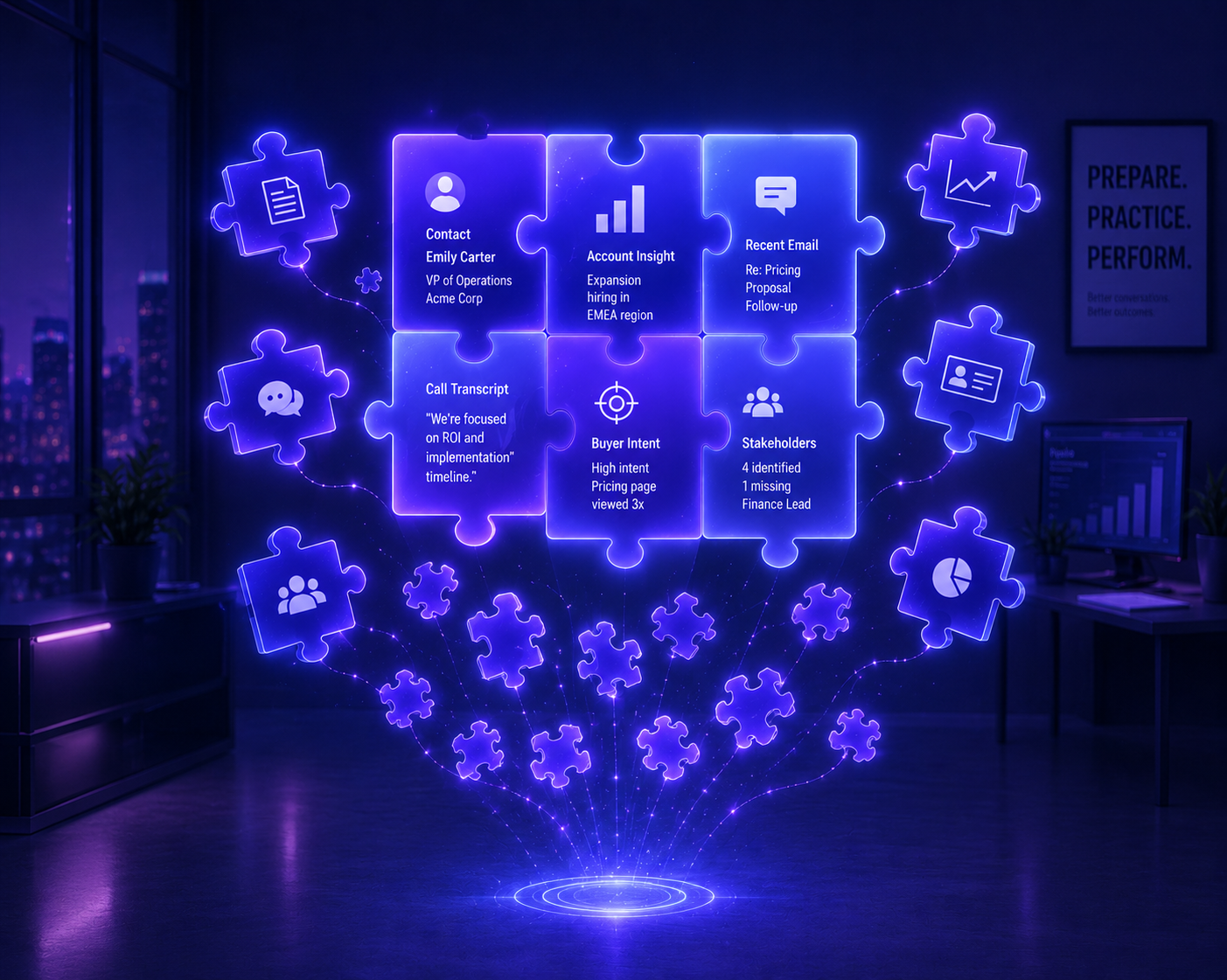
Instead of adding more work, it removes manual effort while ensuring that the right things still happen. Information is captured automatically. Frameworks are applied consistently. Insights are surfaced in real time.
The sales process becomes something that runs in the background—supporting reps instead of slowing them down.
The Future of Automating Your Sales Process
The goal of automation isn’t to replace salespeople—it’s to make them more effective.
When the operational side of selling is handled automatically, reps can focus on what they do best: building relationships, understanding customers, and moving deals forward.
At the same time, leaders gain a clearer, more accurate view of the business.
That combination—better execution on the front lines and better visibility at the top—is what defines modern sales organizations.
And it starts with turning your sales process from a static framework into a system that actually runs itself.
Keep Reading
· 3 min
Why Your Sales Process Looks Good on Paper but Breaks Down in Execution
Most teams don’t have a process problem — they have an execution problem.
Read· 3 min
AI Copilot for Post-Meeting Workflow and Sales Productivity
The call ends, and the real work begins. How AI copilots eliminate post-meeting context switching.
Read