CRM systems are supposed to be the source of truth for your sales organization.
But for most teams, they’re anything but.
Ask a sales rep when they last updated a deal right after a call, and you’ll usually get the same answer: “I’ll do it later.” And “later” often turns into incomplete notes, outdated deal stages, or missing information entirely.
The issue isn’t the CRM itself. Platforms like HubSpot, Salesforce, and Attio are powerful. The problem is the amount of manual effort required to keep them accurate.
And that effort adds up quickly.
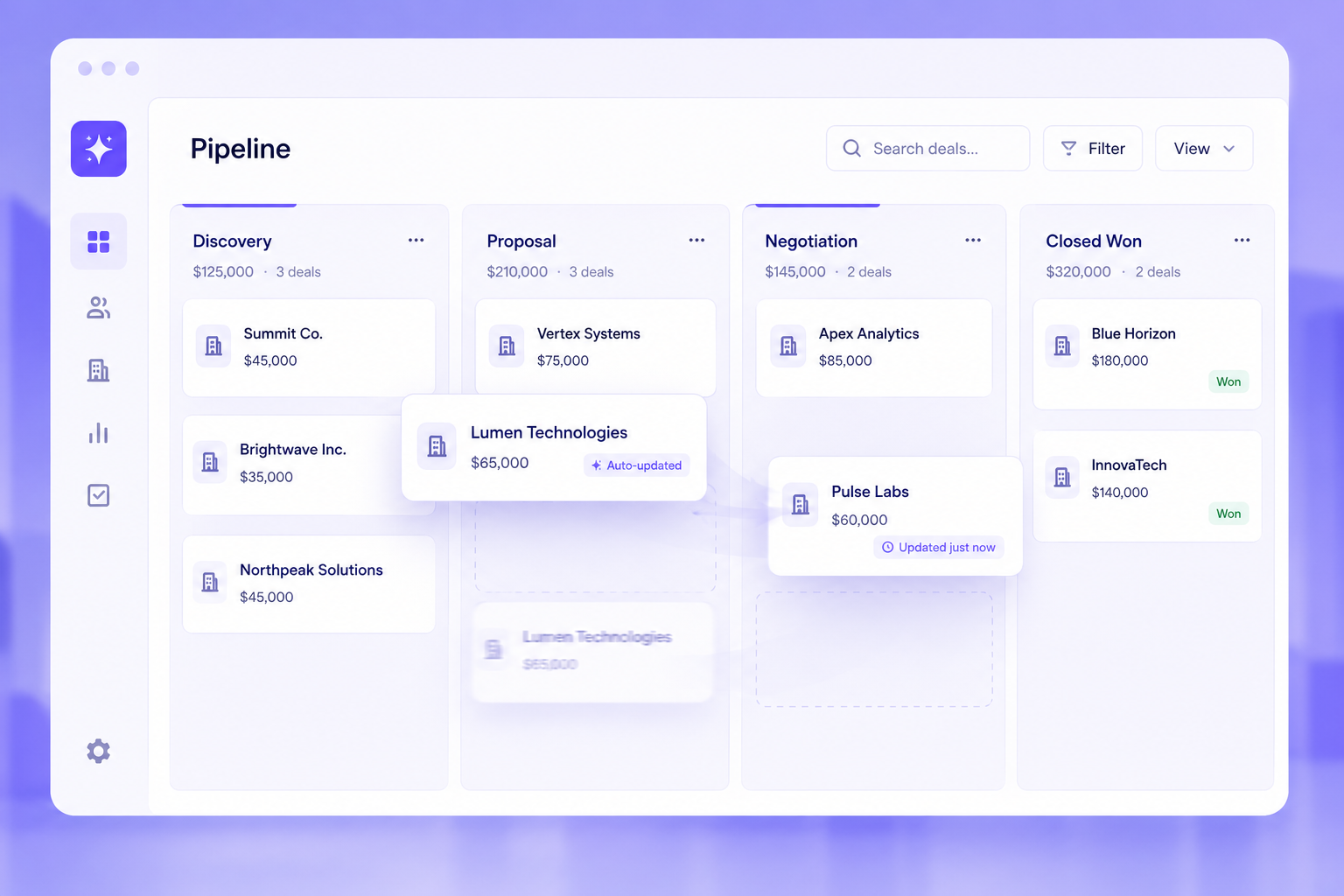
CRM Auto-Fill and CRM Auto-Update for Sales Teams
After every call, reps are expected to log notes, update fields, and capture key details. It’s repetitive work that interrupts their flow and pulls them away from selling.
As a result, updates are delayed—or skipped altogether.
Automated systems change this dynamic completely. Instead of relying on manual input, they capture information directly from sales activities and update records in real time.
Notes are generated automatically. Fields are populated without rep involvement. Key insights are recorded as they happen.
The CRM becomes something that reflects reality instantly, rather than something that needs to be maintained.
CRM Hygiene Best Practices for Accurate Forecasting
Clean data isn’t just a “nice to have.” It’s the foundation of everything from forecasting to pipeline reviews.
When CRM hygiene breaks down, so does visibility. Leaders can’t trust the numbers. Forecasts become guesswork. Pipeline reviews turn into debates about data accuracy instead of discussions about strategy.
The challenge is that maintaining clean data manually doesn’t scale. It relies on consistent behavior across every rep, every deal, every day.
Automation solves this at the source. By removing the need for manual updates, it ensures consistency without requiring constant oversight.